The care edit / / 3 min read
How should you wash and care for activewear?
Care is part of the ritual.
By VERSION T Editorial
The quick answer
Follow the garment’s care label first. For many stretch activewear pieces, a cool gentle wash, suitable detergent and air drying are a useful starting point. Wash similar colours together and avoid treatments the label does not permit.
The care label is a small set of instructions for the fabric in your hands. A routine that works for one pair of leggings may not work for another. Begin there, then make the process simple enough to repeat.
Read the label before the first wash
Check the washing temperature, drying symbol and any restrictions on bleach, ironing or dry cleaning. These are specific to the finished garment, including its trims and construction. A generic care guide should never override them.
If the label is missing or unclear, ask the brand for the instructions for that exact style. Do not infer them from how the fabric feels. Two pieces that look similar may use different fibres, finishes or bonded details.
What should you do after wearing it?
Take damp kit out of your gym bag when you get home. Let it air in a ventilated space if you cannot wash it straight away, rather than leaving it tightly bundled. Follow any specific instructions for swimwear or specialised garments separately.
Before washing, empty pockets and check fastenings. Close zips where the label allows and keep items with rough hardware away from delicate stretch fabrics. Turning a garment inside out can help protect the outer surface from rubbing during the wash.
Choose the wash for the garment
Use a temperature and cycle permitted by the care label. A gentler cycle and a cool wash are common options for stretch pieces, but some garments have different requirements. Separate light and dark colours and leave enough room in the machine for items to move.
Use a detergent suitable for the garment and follow the detergent’s dosing instructions. More detergent is not automatically a better wash. Avoid fabric softener unless the garment manufacturer permits it, and use stain treatments only when compatible with the label.
How should activewear be dried?
Follow the drying symbol. If air drying is permitted, reshape gently and place the garment somewhere ventilated, away from direct heat. Support heavier pieces so they do not hang unevenly. Check whether the label calls for flat drying.
Use a tumble dryer only when the label permits it, with the specified setting. Do not place the garment on a radiator or iron bonded details without checking the instructions. A little patience is preferable to guessing with heat.
A small routine, repeated
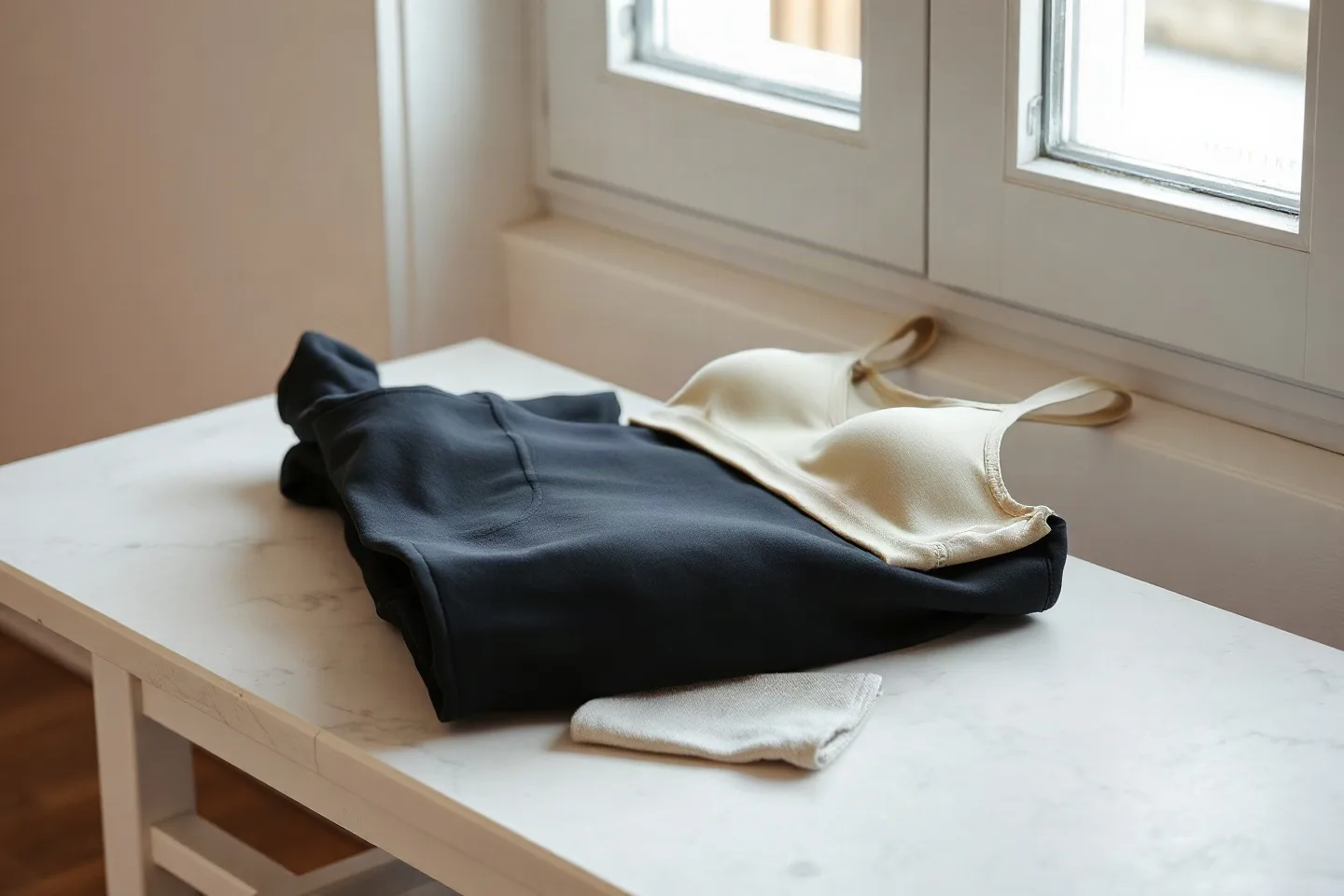
Put pieces away only when they are fully dry. Fold them without stretching straps or waistbands, and keep them away from sharp accessories. Check loose stitching or damaged fastenings before the next wear.
- Read the care label.
- Remove damp kit from your bag.
- Separate colours and protect delicate surfaces.
- Use the permitted wash and drying settings.
- Store fully dry and ready for the next wear.
Common questions
Can you tumble dry leggings?
Only if the care label permits it, using the stated setting. If the label says not to tumble dry, follow its alternative drying instructions.
Should you use fabric softener on activewear?
Avoid it unless the garment manufacturer says it is suitable. Follow the care label and the brand’s instructions for the specific fabric.
How often should you wash activewear?
Assess each wear. Kit that is sweaty, damp, marked or has an odour needs cleaning according to its label. A lightly worn outer layer may have different needs.